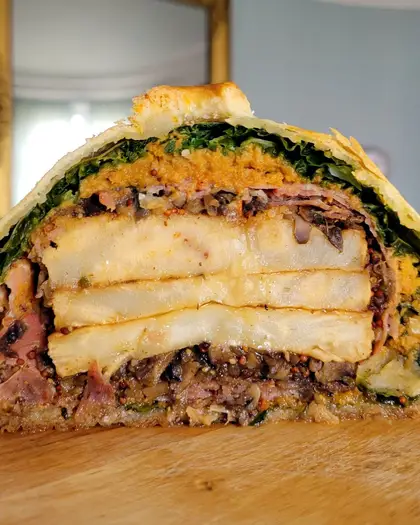
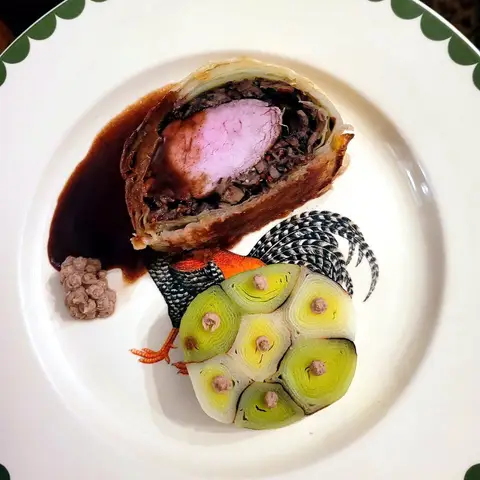
A whole celeriac heart in place of the meat, with roasted butternut, mushrooms and puff pastry.
Ingredients
For the centre and filling
1 large celery root (celeriac)
1 medium butternut squash
250 g of mushrooms
1 onion or shallot
2 garlic cloves
6–8 cabbage leaves
1 tablespoon of Dijon mustard
Fresh thyme
Fresh parsley
A pinch of nutmeg
Olive oil
Butter
Salt & pepper
For the pastry
2 sheets of puff pastry
1 egg yolk
1 tablespoon of water
Method
1
Prepare the celery centre. Peel the celery root and cut it into a thick, compact piece that can sit in the centre of the Pithiviers. Season it with salt, pepper and a little thyme, then sear it in a hot pan with butter and olive oil until nicely browned on all sides.
2
Cook the celery. Transfer the celery to an ovenproof dish and roast at 180–200°C until tender but still firm enough to keep its shape. Allow it to cool slightly. This will become the central element of the Pithiviers, replacing the meat traditionally used in the dish.
3
Prepare the butternut. Peel the butternut, remove the seeds and cut it into small cubes. Place it on a baking tray with olive oil, salt, pepper and thyme. Roast at 200°C for around 25–30 minutes, until soft and lightly caramelised.
4
Prepare the mushrooms. Finely chop the mushrooms, onion and garlic. Cook them in a pan with a little butter or olive oil until soft. Continue cooking until almost all of their moisture has evaporated. Season with salt, pepper and a little thyme.
5
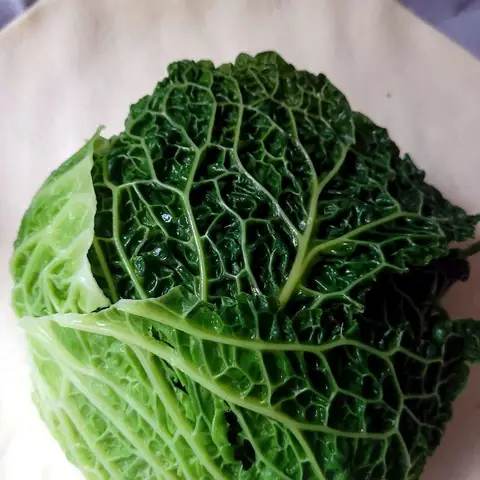
Prepare the cabbage leaves. Bring a large pot of salted water to a boil. Add the cabbage leaves for 1–2 minutes, just enough to soften them. Remove them and immediately place them in cold water. Dry them carefully.
6
Build the vegetable filling. Mix the roasted butternut with the mushrooms, parsley, thyme, nutmeg and Dijon mustard. Keep the mixture relatively chunky rather than turning it into a purée. This will give the Pithiviers a better texture and more visible layers when sliced.
7
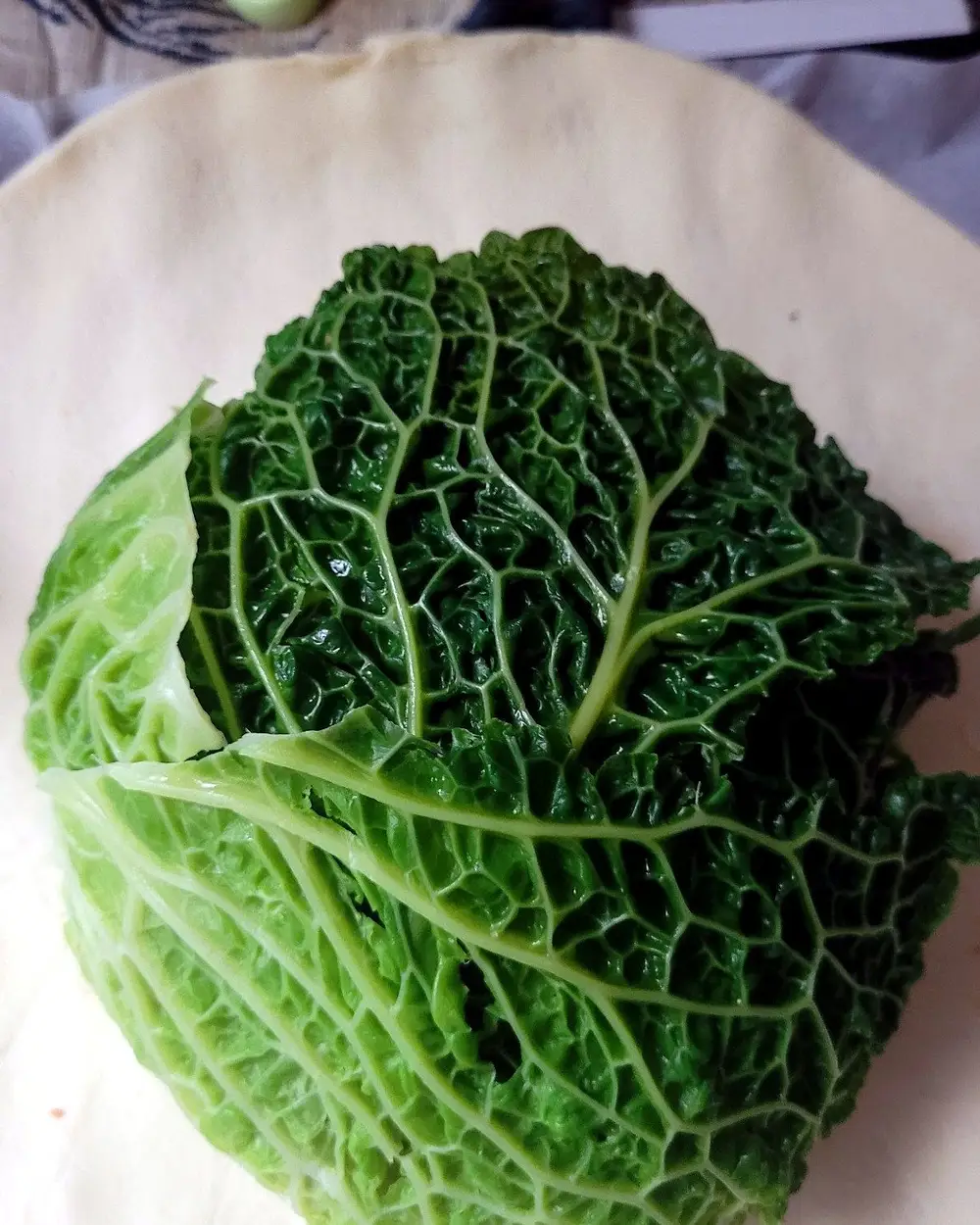
Build the centre. Lay the cabbage leaves slightly overlapping on a sheet of cling film. Place a layer of the butternut and mushroom mixture in the centre, then place the roasted celery root directly in the middle. Pack more of the butternut and mushroom mixture around the celery so that it is completely surrounded.
8
Close with the cabbage. Carefully fold the cabbage leaves around the entire filling, creating a compact parcel around the celery and vegetables. Use the cling film to compress everything into a firm, rounded shape. Place it in the refrigerator for around 15–20 minutes.
9
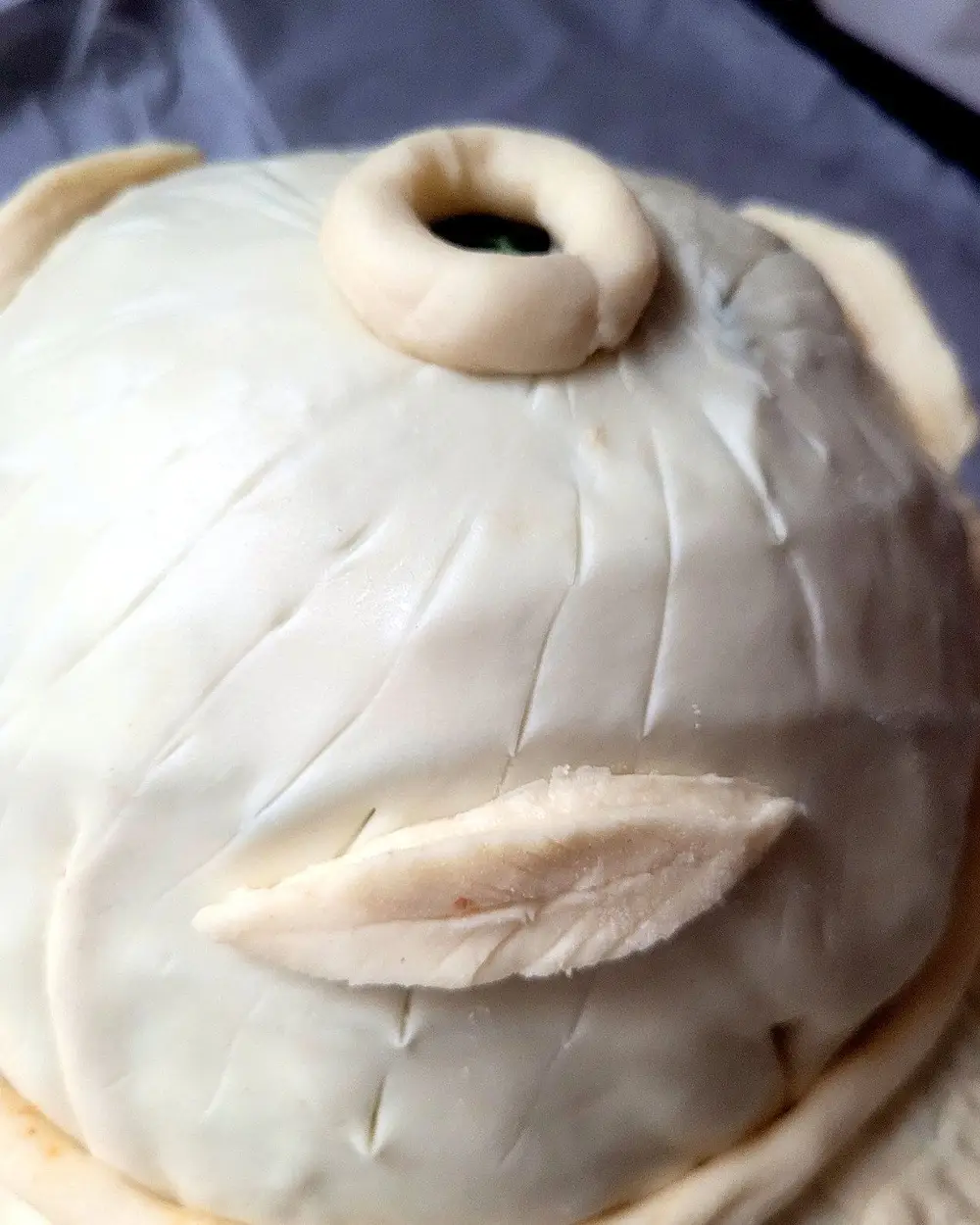
Prepare the pastry. Place one sheet of puff pastry on a baking tray lined with baking paper. Remove the vegetable parcel from the cling film and place it in the centre.
10
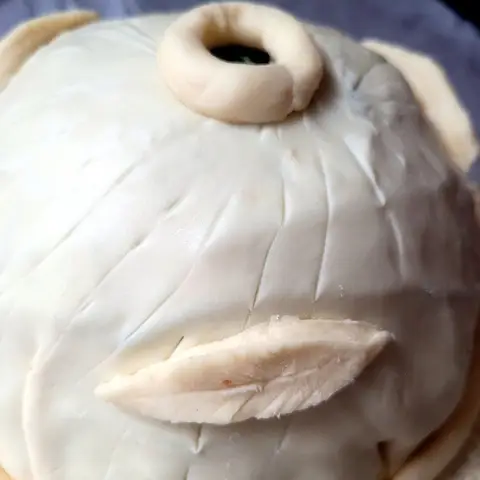
Close the Pithiviers. Place the second sheet of puff pastry over the filling and gently shape it around the dome. Press the edges together firmly and trim away any excess pastry.
11
Create the decoration. Brush the pastry with the egg yolk mixed with a tablespoon of water. Using the back of a knife, carefully draw curved lines from the centre towards the edges to create the traditional sunburst pattern. Make a small hole in the centre of the pastry to allow steam to escape.
12
Chill before baking. Place the Pithiviers in the refrigerator for around 20 minutes. This helps the pastry maintain its shape and creates a cleaner finish.
13
Bake. Preheat the oven to 200°C. Bake for around 35–45 minutes, until the pastry is beautifully golden, crisp and well puffed.
14
Rest and serve. Let the Pithiviers rest for around 10 minutes before cutting. Slice it into wedges and serve immediately. When cut open, the centre reveals the celery “heart” surrounded by roasted butternut and mushrooms, all protected by a layer of cabbage and a crisp golden pastry shell. A vegetarian dish built like an architectural masterpiece — with the celery taking centre stage instead of the traditional meat.